

TL;DR: I searched “IV therapy” on Google Maps in Sunny Isles Beach and checked the top 3 results the way a patient would. Two of three had a website that actually works. Only one had over 100 Google reviews. None of them — zero — had a price, an open appointment time, and a first-visit deal together on one page. That’s the gap. The clinic that puts those three things in one place pulls bookings away from all three. No names — this is about the opportunity, not calling anyone out.
I wasn’t trying to call anyone out. I was trying to book an IV drip in Sunny Isles Beach the way a real patient does: open my phone, search, and see what happens.
That’s the 60-second version I filmed walking through this search live. Below is the longer version — what each number means and what to do about it this month.
What does a Google Maps search for “IV therapy” actually show you?
It shows a list ranked by relevance and distance, with a star rating, a review count, and whatever the website link does once you tap it. A patient doesn’t see your treatment menu or your provider’s credentials at that moment. They see three cards and a few seconds to pick one.
So I tapped into the top 3 the way a patient would: through to the site, through to the reviews, looking for a reason to pick one over the other two.
I checked the top 3 IV therapy clinics on these 3 things — here’s what I found
A website that works: 2 out of 3. One of the top 3 results doesn’t give a patient a working website to land on. For that clinic, every dollar spent getting found is wasted the second someone taps the link. Test your own site on cell data once a month.
Over 100 Google reviews: 1 out of 3. Two of the top 3 clinics patients are choosing between don’t have triple digits of reviews yet. That matters more than it sounds like. BrightLocal’s 2024 Local Consumer Review Survey found 59% of consumers want to see a business with somewhere between 20 and 99 reviews before they trust its star rating. If you’re sitting well under that, a patient scrolling past you to a competitor with more reviews isn’t being unfair — they’re looking for more proof before they hand over their health and their money.
A first-visit offer: 0 out of 3. Not one of the top 3 results had a clear deal for someone who’s never been in before. First-time patients are the most price-sensitive and most likely to have all three tabs open at once, comparing. A simple first-visit price takes the fear away and gives them a reason to pick you today instead of “researching more” and forgetting to come back.
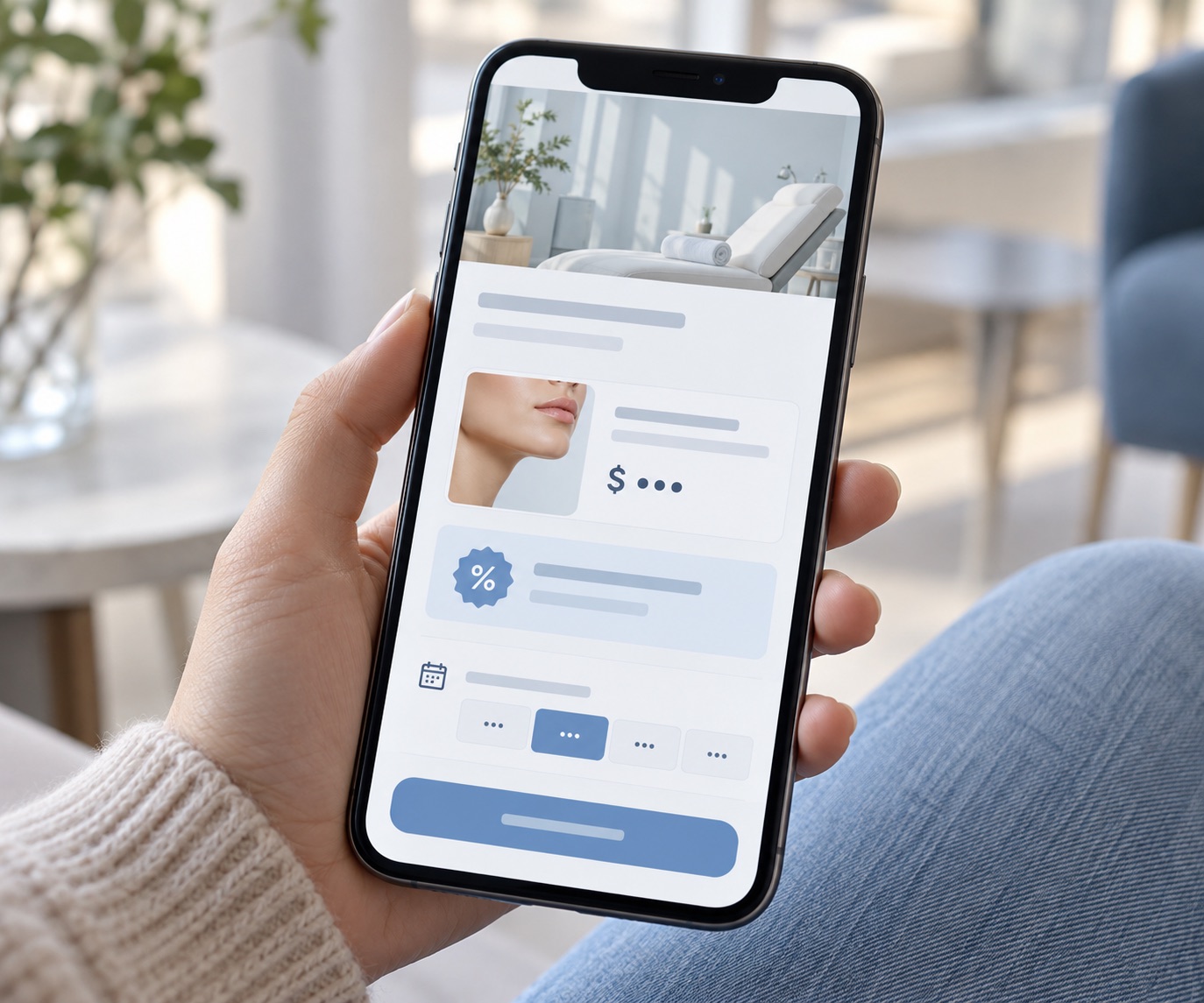
The biggest opportunity: none of the top 3 put a price, an open time, and a first-time deal in one place. A patient comparing clinics has to dig for each piece separately — call for the price, check another page for availability, hope someone mentions a deal. Most people won’t do all three; they’ll book whoever makes it easiest. Put all three on one page and you’re removing the exact friction sending patients back to Google to try clinic #2.
“Whoever puts a price, an open time, and a first-time deal in one place pulls patients from all three competitors — because the others are making people work to book.”
Why does a page like this beat three separate strong points?
Because a patient comparing clinics isn’t grading you on a curve — they’re looking for the fastest “yes.” A clinic with great reviews but a hidden price loses to a clinic with decent reviews and a clear price, an open slot, and a deal, because the second one answers every question before the patient has to ask it. You’re not competing on who’s the best clinic. You’re competing on who makes booking easiest, right now, from a phone.
It also matters for AI search. More people now ask a chat tool “how much is IV therapy near me.” A page that states a clear number, a time and an offer gives that tool something to quote. A page that says “call for details” gives it nothing.
Why isn’t content optional for a clinic like this past 2026?
Because patients pick an IV therapy clinic the way they pick a restaurant: they look it up first. There’s no doctor handing out referrals to an IV drip bar. The patient decides, based on what they find online — your Google Business Profile, your reviews, your website, your Instagram.
A 2021 healthcare consumer report cited by MSDC found patients rely on online research 2.2 times more than on provider referrals when choosing where to go, and 84% would not see a referred provider rated under 4 stars. That’s the world front-facing clinics are operating in now. The patient’s first “visit” to you happens on a screen, days before they walk in the door.
To be fair to the other side: a cardiologist or a surgeon who gets most patients from a referring physician doesn’t need to win this way — their patient already decided to come before opening Google. But that’s not how IV therapy, med spas, chiropractic, or longevity clinics get patients. Those patients are searching and comparing before they ever call. If that’s your clinic, the website and the social content aren’t a nice-to-have anymore — they’re the front door.
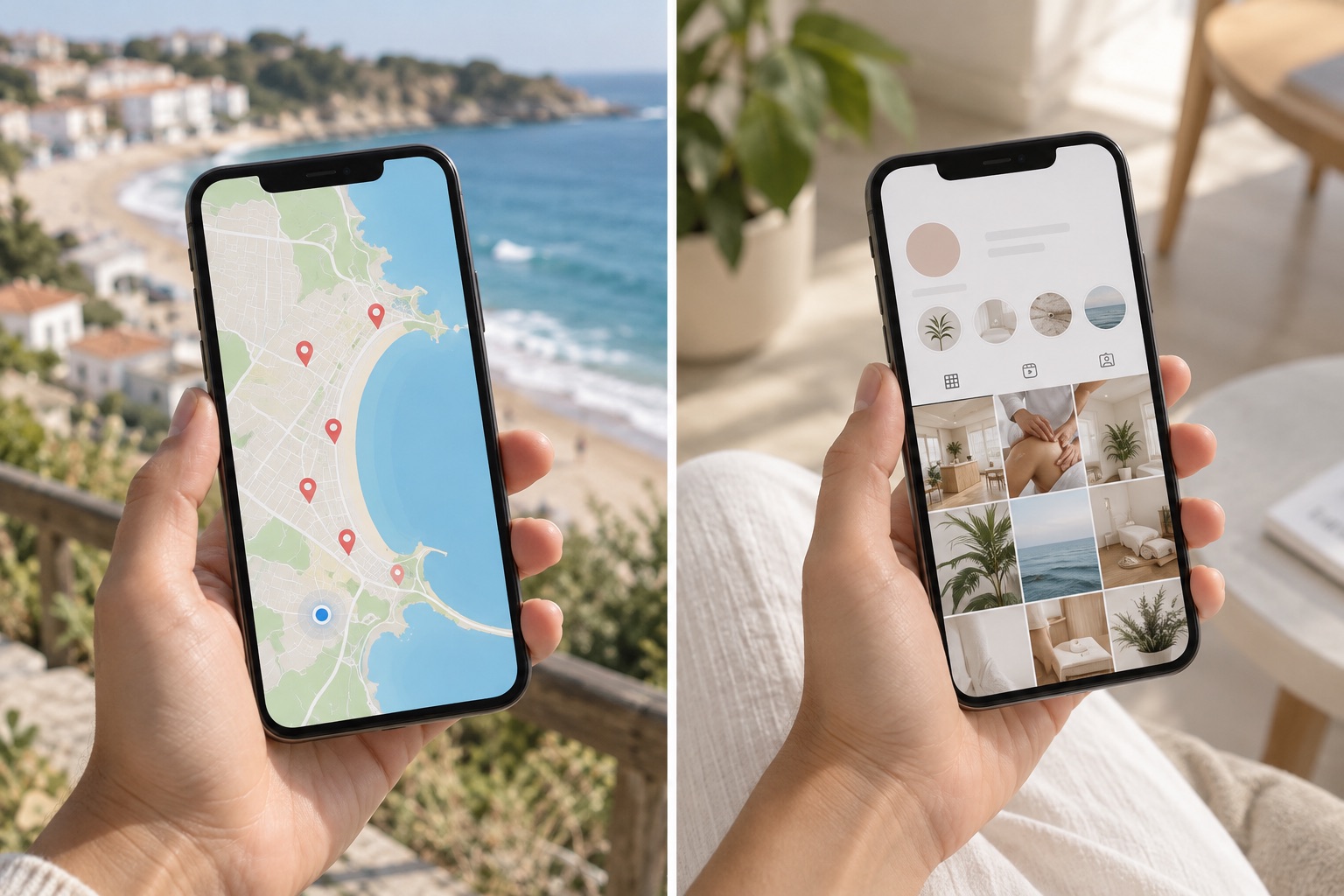
How do you actually get past 100 Google reviews without buying them?
You ask, consistently, at the moment patients are happiest. Google’s own guidance on getting more reviews is simple: ask directly, make it as easy as sharing a link, and do it as a normal part of how your business runs — not a one-time push. For a clinic, that moment is right after a good drip, while the patient still feels better. A short link on a card or a text sent an hour later beats a generic email every time.
Reviews aren’t one-and-done, either. Google’s guidance on improving local ranking calls out responding to reviews and keeping your Business Profile accurate as factors in how you show up in local search, not just your star average. A clinic that replies to every review and asks for a new one every week pulls ahead of one that got 80 reviews in its first year and stopped asking.
What should you put on your website this month?
Three things, together, on the page a patient lands on first:
- A price. Even a “starting at” price for your most common drip. Vague pricing sends people back to Google to compare you against clinics that show a number.
- An open time. Real availability, not a contact form that says “we’ll get back to you.” A visible opening today or tomorrow gets grabbed before the tab closes.
- A first-visit offer. A simple deal for someone who’s never been in. It doesn’t need to be a huge discount — it needs to exist and be easy to find.
Put all three together on the first screen, where a patient doesn’t have to scroll or call to find them.
Your “do this this month” checklist
- ☐ Open your own website on your phone, on cell data, and time how long it takes to load
- ☐ Try to book yourself through your own site — does the button actually work?
- ☐ Check your Google Business Profile review count against the 20–99 range patients expect to trust a rating
- ☐ Set up a simple ask: a text or card handed out right after a good visit, with a direct review link
- ☐ Reply to your last 10 Google reviews, good and bad
- ☐ Build (or find) one page with your price, your next open time, and a first-visit offer, all visible without scrolling
- ☐ Post that first-visit offer on your Instagram and pin it to your profile
- ☐ Check that your city name (“Sunny Isles Beach”) is actually on that page
FAQ
Do I need to show my exact price, or is “starting at” enough? “Starting at” is enough, and it’s often smarter for treatments that vary by patient. The point isn’t a perfect price list — it’s giving a patient a real number instead of nothing.
Will a first-visit deal attract people who never come back? Some, yes — that happens with any new-patient offer. The fix is in the offer itself: make it a first step into a care plan, not a one-time coupon, and track how many first-timers come back.
How many Google reviews does my IV clinic actually need? There’s no magic number, but BrightLocal’s 2024 survey found most consumers want to see somewhere between 20 and 99 reviews before they trust your star rating. Below that, you’re asking people to take a bigger leap of faith than your competitors are asking for.
My clinic gets most patients from word of mouth already — do I still need this? If most of your new patients come from a doctor’s referral, you’re closer to the specialist exception and this matters less. If your patients find you themselves — through a Google search, an Instagram ad, or a friend’s recommendation they then go verify online — this is exactly who this is for.
Is social media or the website more important? Both, because they do different jobs. Social content is how people find out you exist and start trusting you before they ever search. The website is where that trust turns into a booked appointment. A clinic strong on one and weak on the other is leaving patients on the table either way.
No names, no finger-pointing — this is the opportunity sitting right there for whoever moves on it first. Want me to run this same audit on your clinic, on camera? Comment or DM “AUDIT.” [Book a free review →]
