
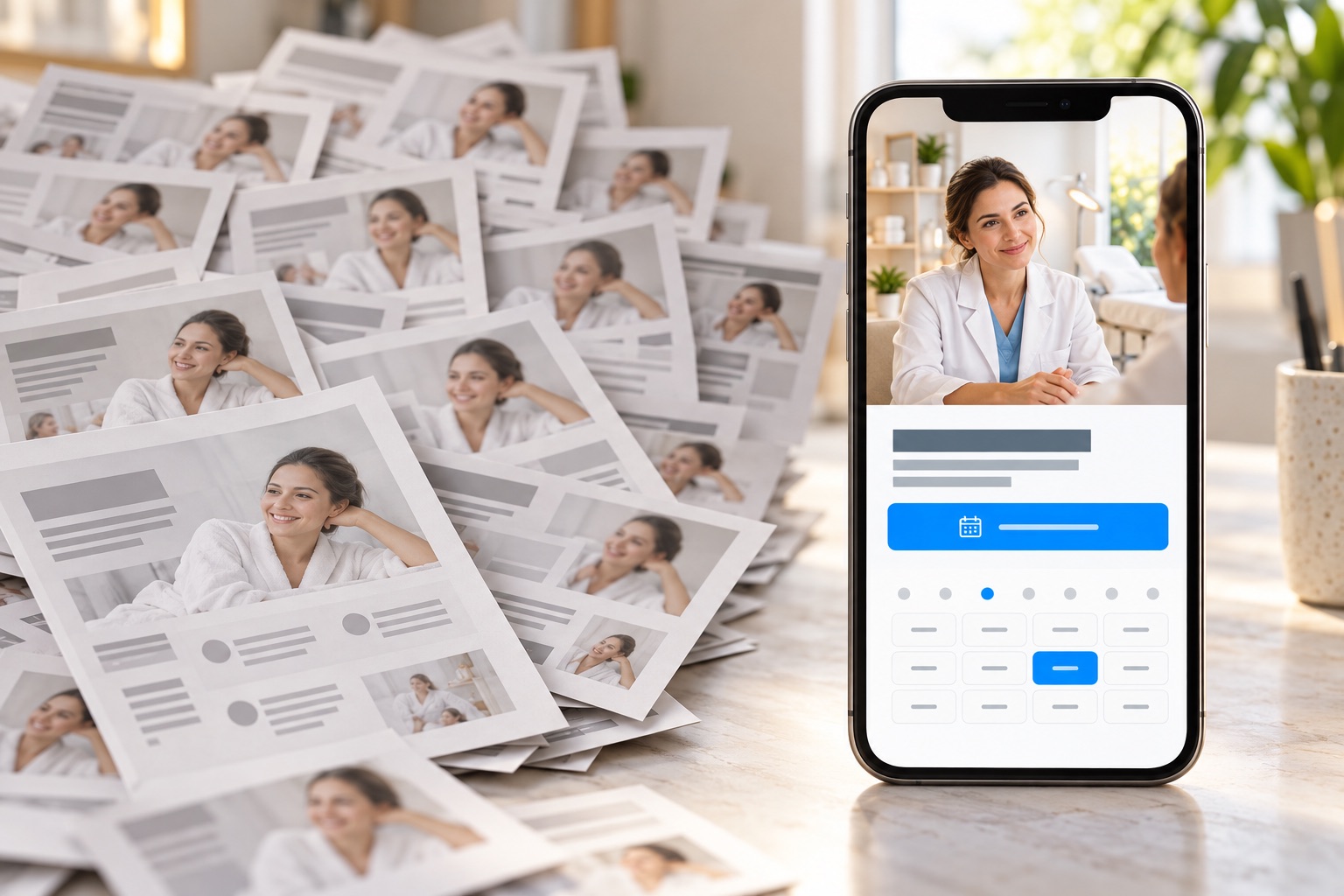

TL;DR: Most clinic websites fall into one of two traps. Either they say too much: hundreds of thin pages, one per treatment, each saying almost nothing. Or they say too little: one AI-written page with generic text, sometimes describing services the clinic doesn’t even offer. Google now warns against both: its spam rules call out pages mass-produced with AI that add no value, and since October 1, 2026 it tells site owners to fact-check every AI-written line before publishing. A good landing page sits in the middle. It talks about one thing a patient is actually looking for, in that patient’s words, from a real provider in a real place, with one clear way to book. Below are the 10 things every clinic landing page needs, and a simple test for each.
Why do so many clinic websites miss?
Because most clinic owners pick “cheap and fast” without meaning to.
You’ve heard the rule: cheap, fast, good, pick two. A website built from a template in an afternoon, or written by typing “write a landing page for my wellness clinic” into an AI tool, is cheap and fast. It’s rarely good. The tool doesn’t know your first visit, your provider, your neighborhood, or the questions your front desk hears every day. So it fills the gaps with words that could belong to anyone.
And that’s the real cost. Why would you choose to make your website look and sound like everyone else’s?
Think about what a patient takes away from a page like that: “Oh, another health and wellness clinic that provides the same thing.” Guess what comes after that? “How much do they charge?”
When every clinic sounds the same, price is the only thing left to compare. That’s how you end up with price shoppers: people who call three clinics, pick the cheapest one, and leave the moment someone else runs a discount. For a self-pay clinic, those are the hardest patients to keep.
Differentiation is key in this market. Your page has to answer the one question a template never can: why you, and not the clinic down the street?
We see two results over and over.
Camp 1: Too much. A page for every treatment on the menu. IV therapy, NAD+, peptides, ozone, PRP, hormones, weight loss, and 40 more, each with three short paragraphs that say the same thing. None of them is good enough to rank, convince, or book.
Camp 2: Too little. One page, clearly generated by AI. “Unlock your best self.” “Holistic care tailored to you.” Sometimes it lists treatments the clinic doesn’t do. Sometimes it still has another clinic’s details in it, because it was copied from a template and nobody read it all the way through.
Neither one helps a patient decide. And Google is now pushing back on both.
Does Google penalize AI-written clinic pages?
Not for using AI. For using it to fill space.
Google spells this out. Its spam policies name “using generative AI tools or other similar tools to generate many pages without adding value for users” as an example of what it calls scaled content abuse. Sites that break those policies can rank lower or drop out of results entirely.
Then, on October 1, 2026, Google updated its guidance on using AI content. The new version says: “It is critical to manually factcheck and review all AI-generated content for accuracy and trustworthiness before publishing.” That includes the page title, the description that shows up in search results, and image alt text. It also points to the rules Google’s human reviewers use to spot pages “created with little to no effort, little to no originality, and little to no added value.”
That came right on the heels of Google’s September 2026 spam update, which rolled out from September 24 into early October.
Now look at the two camps again:
- Camp 1, 40 near-identical treatment pages, is what “many pages without adding value” looks like.
- Camp 2, one unchecked AI page that mentions a treatment you don’t offer, is exactly the kind of content Google now says must be fact-checked before it goes live.
So both camps aren’t just missed chances anymore. They’re a risk.
1. Does the page focus on one thing a patient is searching for?
One page should answer one need. Not one treatment name, but one problem or goal a patient types into Google.
“IV therapy” is a treatment. “IV hydration after a long flight in Miami” is a need. Patients search the second way.
The test: Would you spend ad money sending people to this page? Would your front desk be happy booking ten of these this week? If not, it probably doesn’t deserve its own page. Fold it into a broader page instead.
2. Does the first screen answer three questions in plain words?
Before anyone scrolls, the top of the page has to answer:
- What is this?
- Is it for me?
- What do I do next?
Use the words your patients use, not the words in the brochure. “Sleep through the night again” beats “optimize your circadian health.” Describe how they’ll feel, not what the treatment is called.
The test: Show the first screen to someone outside your industry for five seconds. Can they tell you what you do and who it’s for?
3. Does it say where you are?
Patients want care close to home. Google wants to know where you are too.
Put your city or neighborhood in the page title and the main headline. Show your real address, a map, and parking details. If you serve nearby areas, name them.
The test: Cover your logo. Could this page belong to a clinic in another state? If yes, it needs more local detail.

4. Can patients see the real person who will treat them?
People don’t book a clinic. They book a person they trust.
Show your provider’s name, credentials, and face. Better yet, a short video of them explaining the treatment the way they would in the room. Use real photos of your team and your space, not stock photos of smiling people in robes.
“If a competitor could swap in their logo and publish your page as-is, it isn’t your page yet.”
5. Does it say who it’s NOT for?
This feels backwards, but it works. Saying who a treatment isn’t right for builds trust and keeps away people who were never going to start a care plan.
If you’re a self-pay clinic, say so clearly and early. Explain why: “We don’t take insurance. That’s how we can spend an hour with you instead of ten minutes.” The right patients will respect that. The price shoppers will move on before they take up a slot.
6. Does it explain what the first visit looks like?
Fear of the unknown stops people from booking. Take it away.
Walk them through it: what happens when they arrive, how long it takes, who they’ll see, and what happens after. If you offer a first step with a set price, say it. For the full plan, explain how pricing works (“Your plan is built at your first visit, and we’ll go over the cost before anything starts”).
The test: Could a nervous first-time patient picture the whole visit before they walk in?
7. Is there one clear next step, and does it actually work?
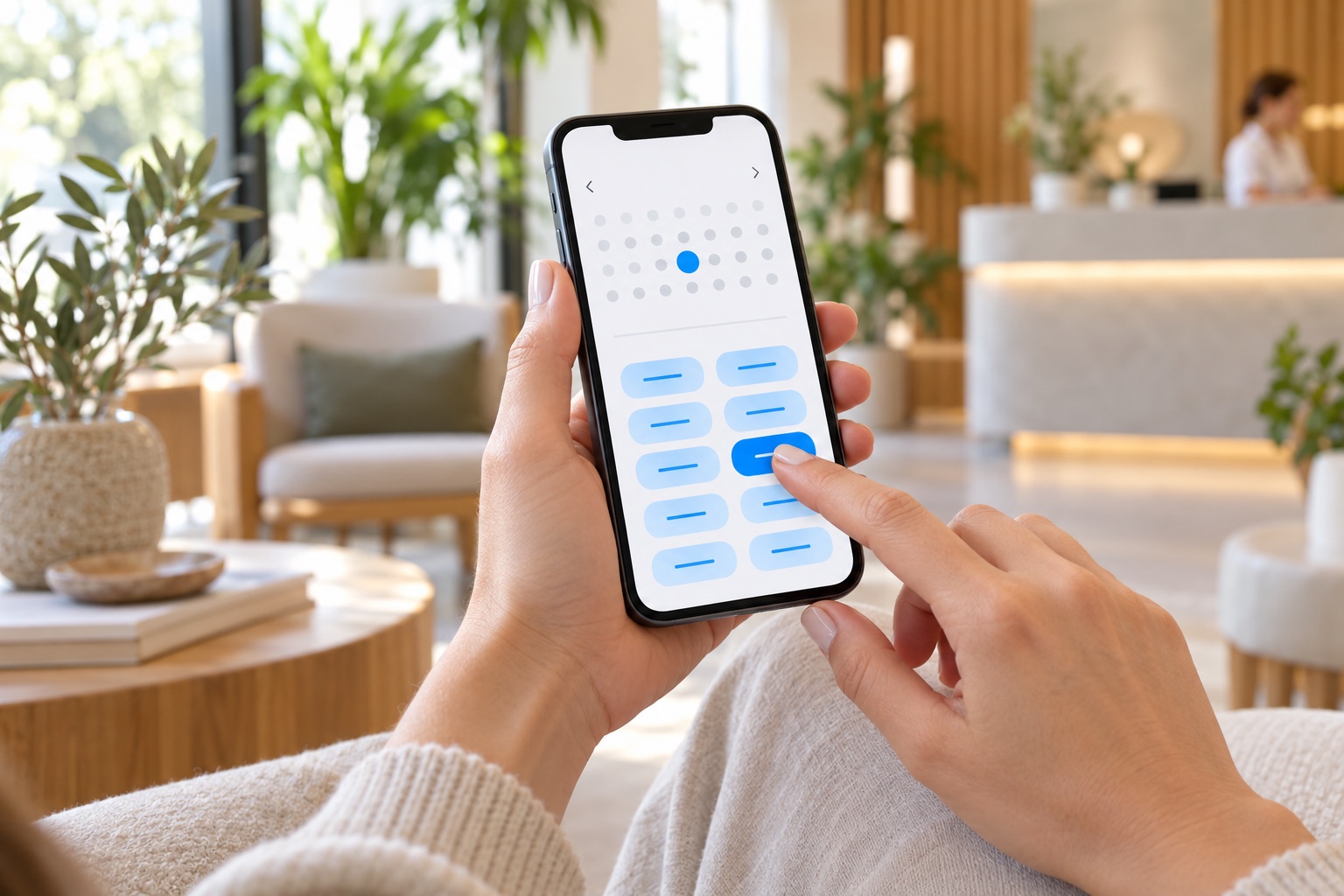
One main button. Ideally, it lets the patient pick a real time, not fill out a form that says “we’ll get back to you.” Add a tap-to-call phone number for people who’d rather talk.
Then click your own button. On one clinic site we checked, the “Book” button led to a booking page with no services on it. The button existed. The booking didn’t.
We see this on the street, too. In our Day 5 scan, we checked the top 3 IV therapy clinics in Wynwood on Google Maps. Only 1 of the 3 let you book a real time online:
View this post on Instagram
8. Does the proof sound like your patients?
Star ratings tell people you’re nice. Stories tell them you can help someone like them.
Use patient stories (with their permission) that describe the problem in their own words: “I couldn’t sleep on my left side for two years.” Group them by problem, so a page about knee pain shows a knee story, not a random five-star review.
9. Does it answer the questions your front desk hears every day?
Write down the ten questions your team answers on the phone most often. Answer them on the page, one by one, in plain words.
This helps patients, saves your staff time, and is exactly what AI search tools (like Google’s AI Overviews and ChatGPT) pull from when someone asks a question about your treatment in your city.
10. Is every sentence true for your clinic?
This is the one AI templates fail most often. Read every line and ask: Do we actually offer this? Is this how we actually do it? Is this our address, our hours, our provider?
A single wrong detail, like a treatment you don’t offer or another clinic’s name left in a template, tells a careful patient that nobody is paying attention. And careful patients are the ones you want.
Google now asks for this in writing: fact-check and review all AI-written content before you publish it, including the page title and the short description that shows in search results.
Can you still use AI to build the page?
Yes. AI is a great writing helper. But it can only work with what you give it. A good page needs inputs only you have:
- The one patient need this page is for
- How your patients describe that problem
- What your first visit actually looks like
- Your provider’s background, in their own words
- The ten questions your front desk hears most
- Real photos, real stories, and a booking link that works
Bring those, and you can get “good” and “fast” at the same time. Skip them, and you’re back to cheap and fast.
The short version: a landing page checklist
- ☐ A clear reason patients pick you over the clinic down the street
- ☐ One page, one patient need
- ☐ First screen: what it is, who it’s for, what to do next
- ☐ City or neighborhood in the title and headline
- ☐ Real provider: name, face, credentials, ideally video
- ☐ Who it’s not for (and your insurance answer)
- ☐ What the first visit looks like, step by step
- ☐ One button that books a real time, plus tap-to-call
- ☐ Patient stories that match the problem on the page
- ☐ Answers to your front desk’s top ten questions
- ☐ Every sentence true for your clinic
FAQ
How many landing pages does a health and wellness clinic need? One for each patient need you actively want to grow, usually three to eight, not one per treatment on your menu. Start with the services that bring in the most care plans.
Is a one-page website enough for a wellness clinic? It can work for a brand-new clinic with one main offer. But if it’s generic, a single page won’t show up for the specific things patients search for, and it won’t convince the ones who find it.
Will Google penalize my clinic website if AI wrote it? Not just because AI helped. Google’s rules target pages made in bulk that add nothing for the reader, however they were made. Since October 1, 2026, Google also says to fact-check every AI-written line before publishing. Use AI as a helper, put your real details in, and read every sentence.
Should a clinic show prices on its landing page? Not always. For simple, one-time services like an IV drip, showing the price helps people book faster. For high-ticket care, show a price for your first step, like a first visit or a lab review, so people know what it takes to get in the door. Keep the price of the full plan for the first visit, since it’s built around each patient.
Can I use AI to write my clinic’s website? Yes, as a helper. Give it your real details (your first visit, your provider, your patients’ words, your common questions) and then check every sentence. Never publish AI text without reading it line by line.
Want a second set of eyes on your clinic’s landing page? M10DIGITAL will look at it and tell you which of these ten it’s missing. [Book a free review →]
